Three Grounds
Naramata, British Columbia
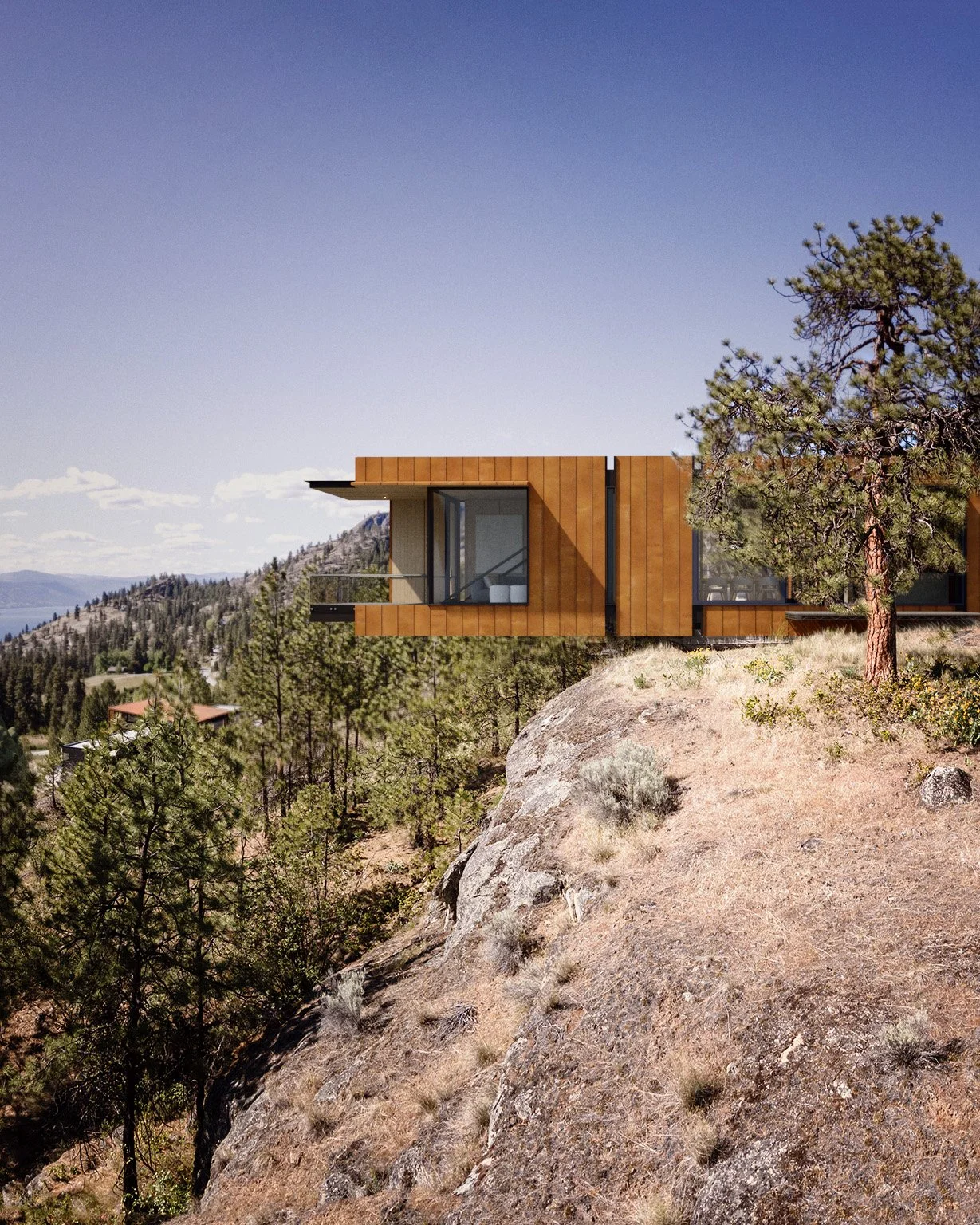
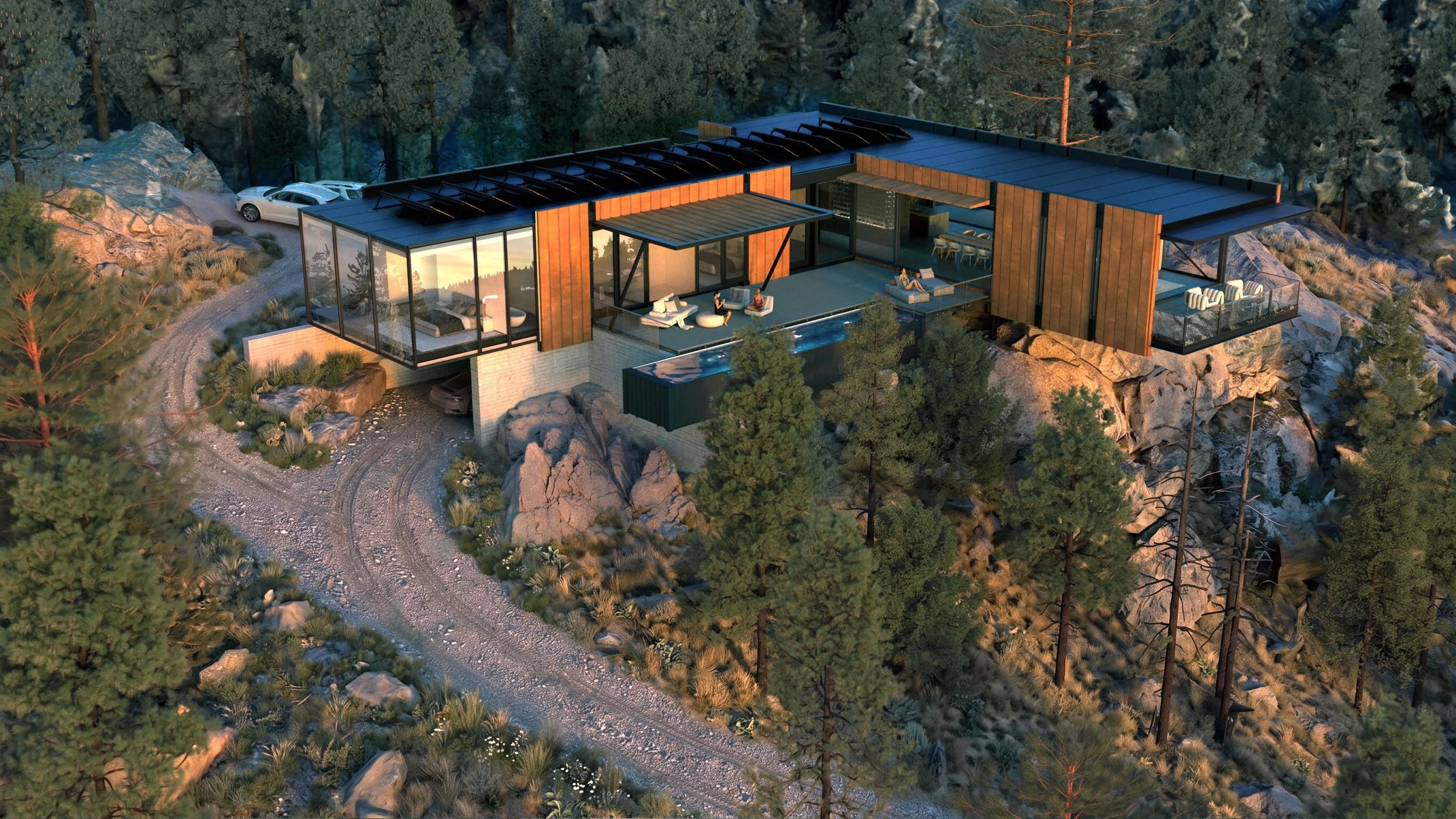
Commissioned to test the development potential of an unbuilt residential site above Naramata, this study asks how one house might meet three different ground conditions within the same rocky hillside. The garage is excavated into the slope where cutting resolves access. The bedroom wing bears on the upper ridge. The living wing projects beyond the rock face where the land falls away.
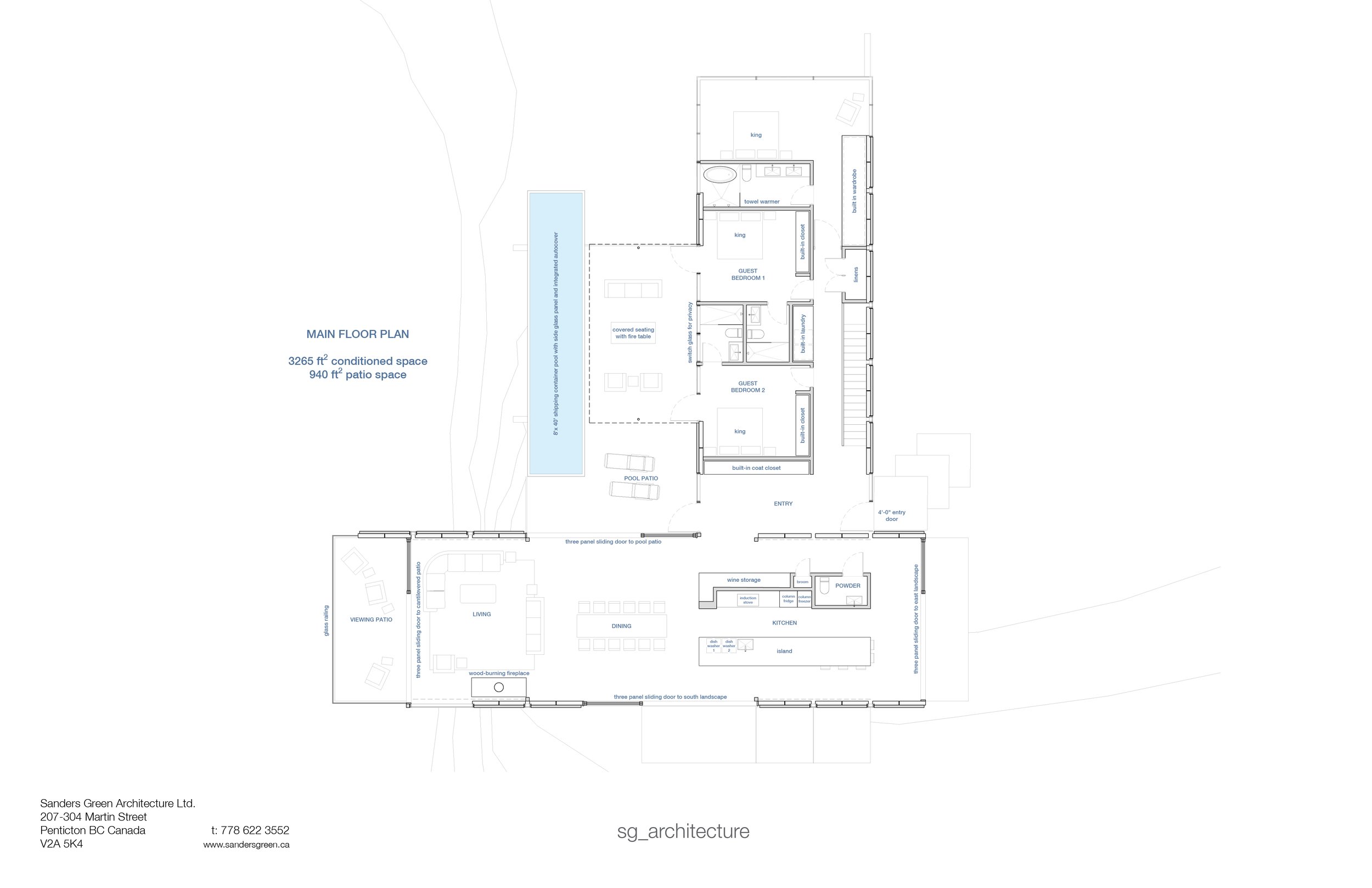
An L-shaped plan ties these three conditions together. The private wing follows the upper ground, while the public wing runs across the ridge toward the lake. Where the two meet, the building forms a sheltered outdoor room with a linear pool along its northern edge.
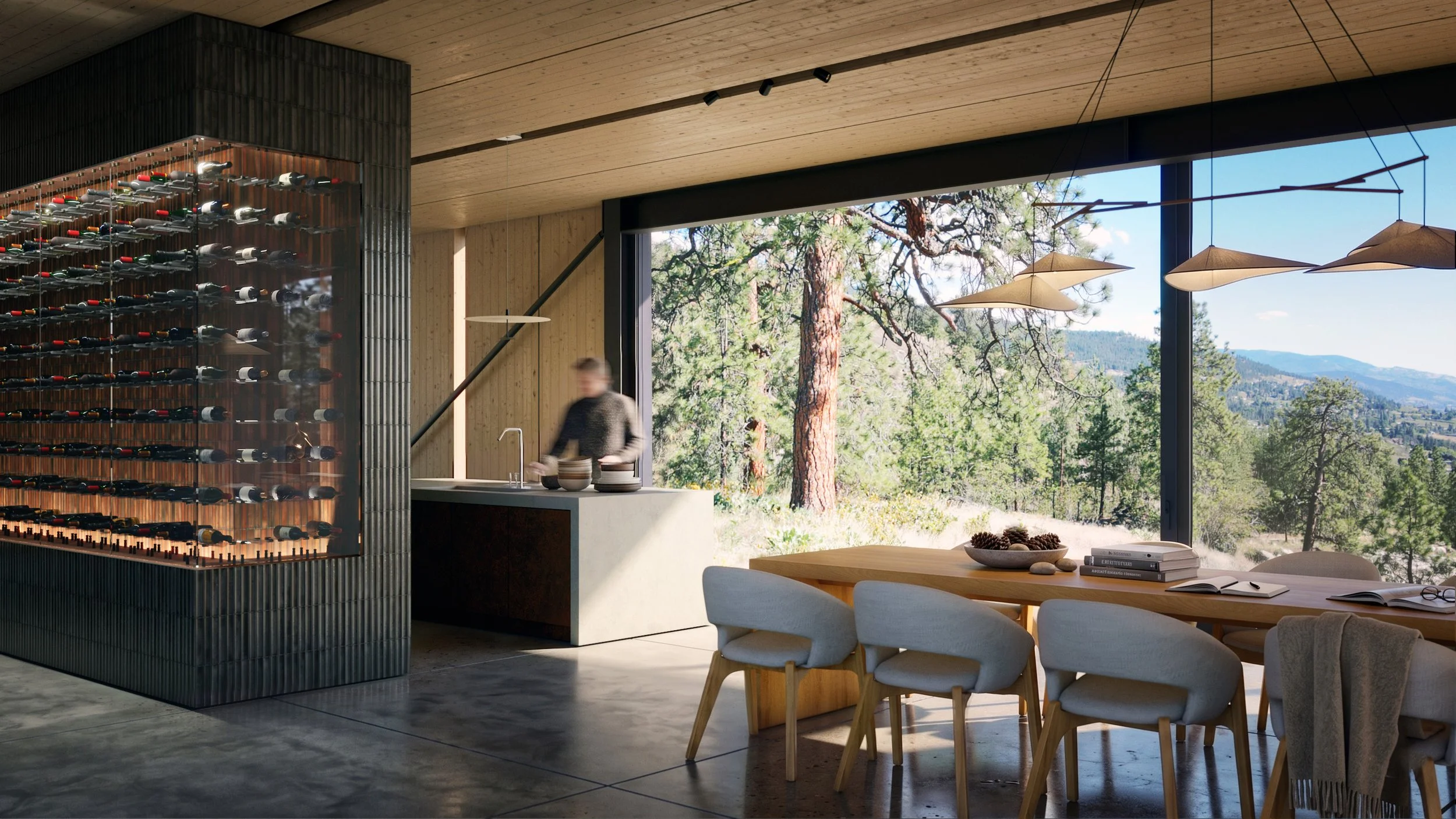
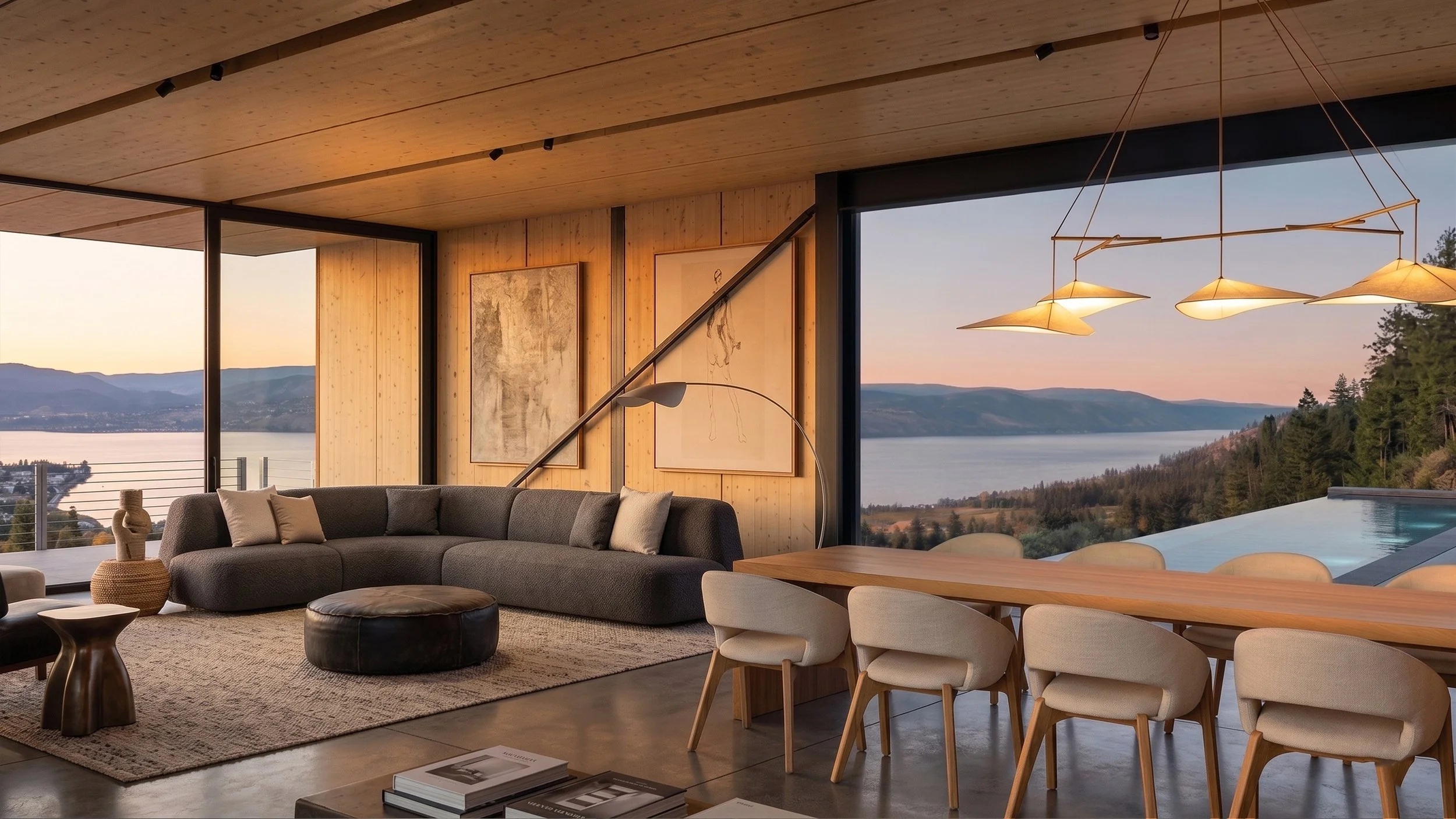
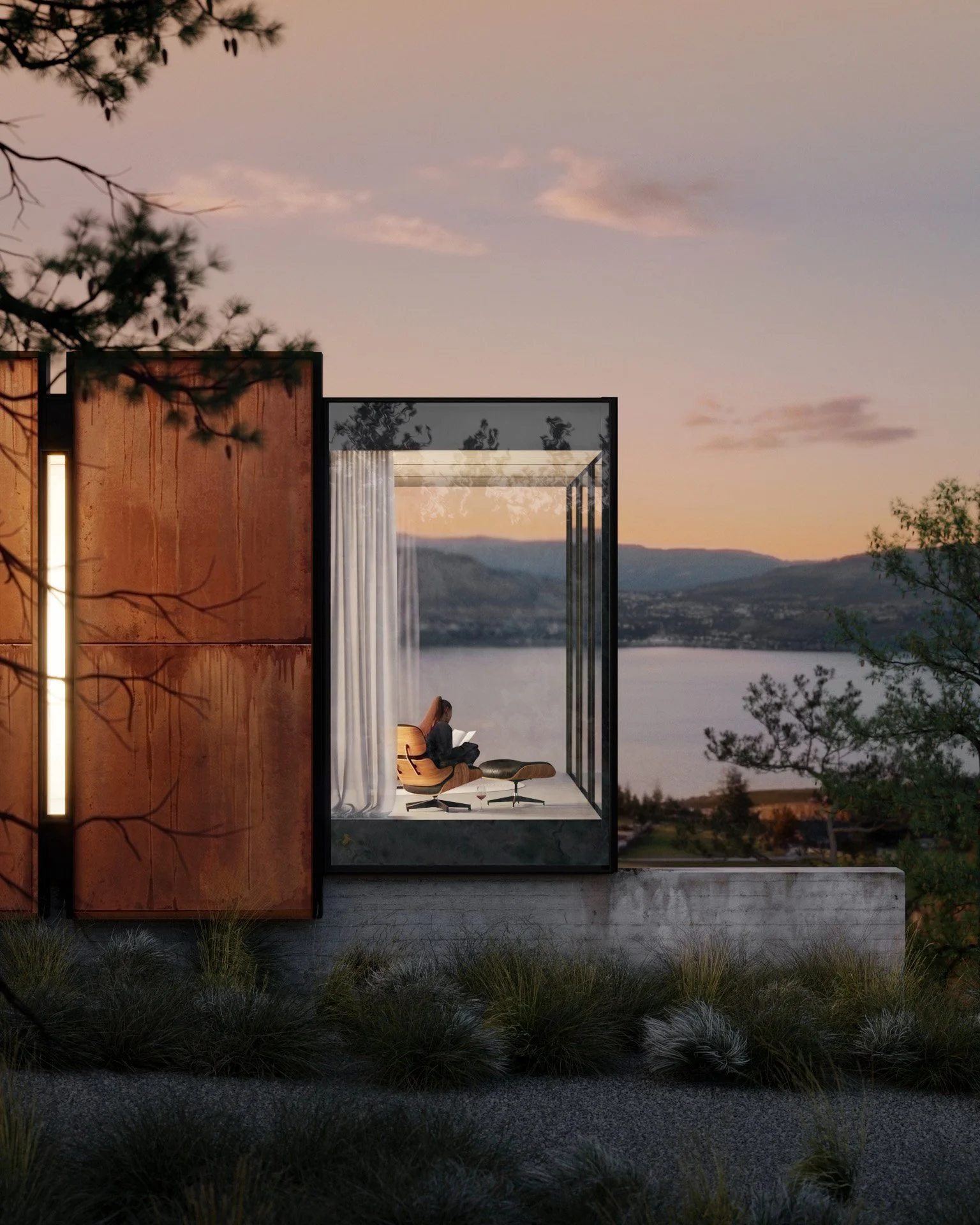
The living, dining and kitchen spaces open in several directions rather than treating the western view as the site’s only useful condition. To the north they address the protected pool court. To the south they face the existing Ponderosa pine and rocky ground beside the house. To the west, the living room extends beyond the ridge to the lake and valley beyond.
Cross-laminated timber forms the primary floor and roof structure, working with steel where the living wing leaves the ground. The timber remains exposed inside, while weathering steel forms a durable, non-combustible exterior suited to the dry hillside.
The study does not propose one universal way of building on difficult terrain. It uses excavation, direct support and projection selectively, allowing the relationship between building and ground to change as the site changes.