
Three Mile Outlook: A Pavilion on the Bench
Three Mile Outlook sits within a working vineyard on a silt bluff above Okanagan Lake. The house is composed of lower, solid volumes gathered around a taller glazed pavilion, balancing the privacy of individual rooms with a shared space that opens across the vineyard to the lake.
The plan developed through a series of studies that tested the program against wind, sunlight, views, vineyard operations, privacy and the narrow area of the site suited to shallow foundations. Rather than combining everything into one large mass, the house separates the primary rooms, guest spaces and entry into distinct pieces that can operate with some independence.
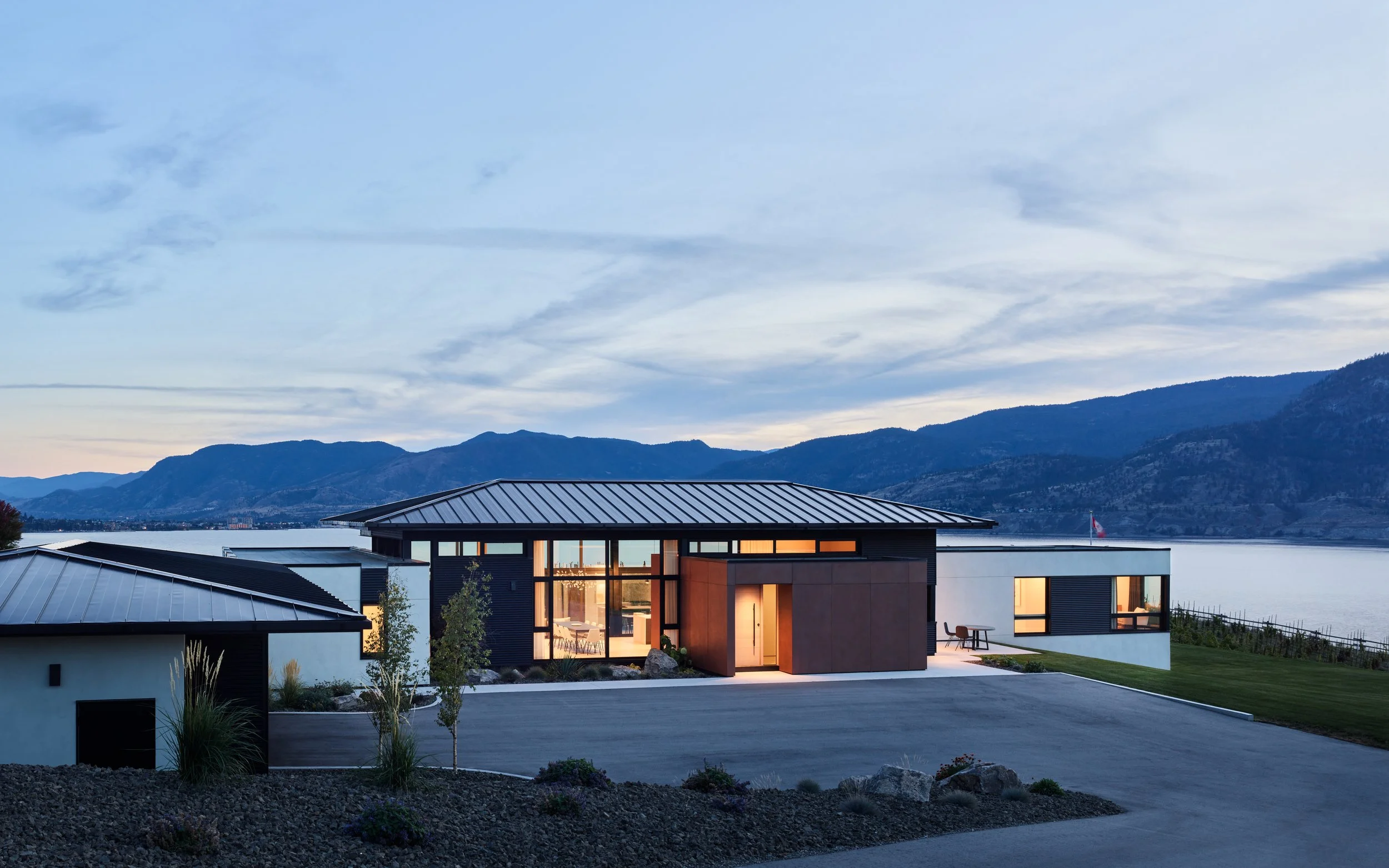

Bedroom and Entry Spaces ‘slide’ under the roof.

Intimate outdoor spaces are created between the bedroom ‘blocks’.
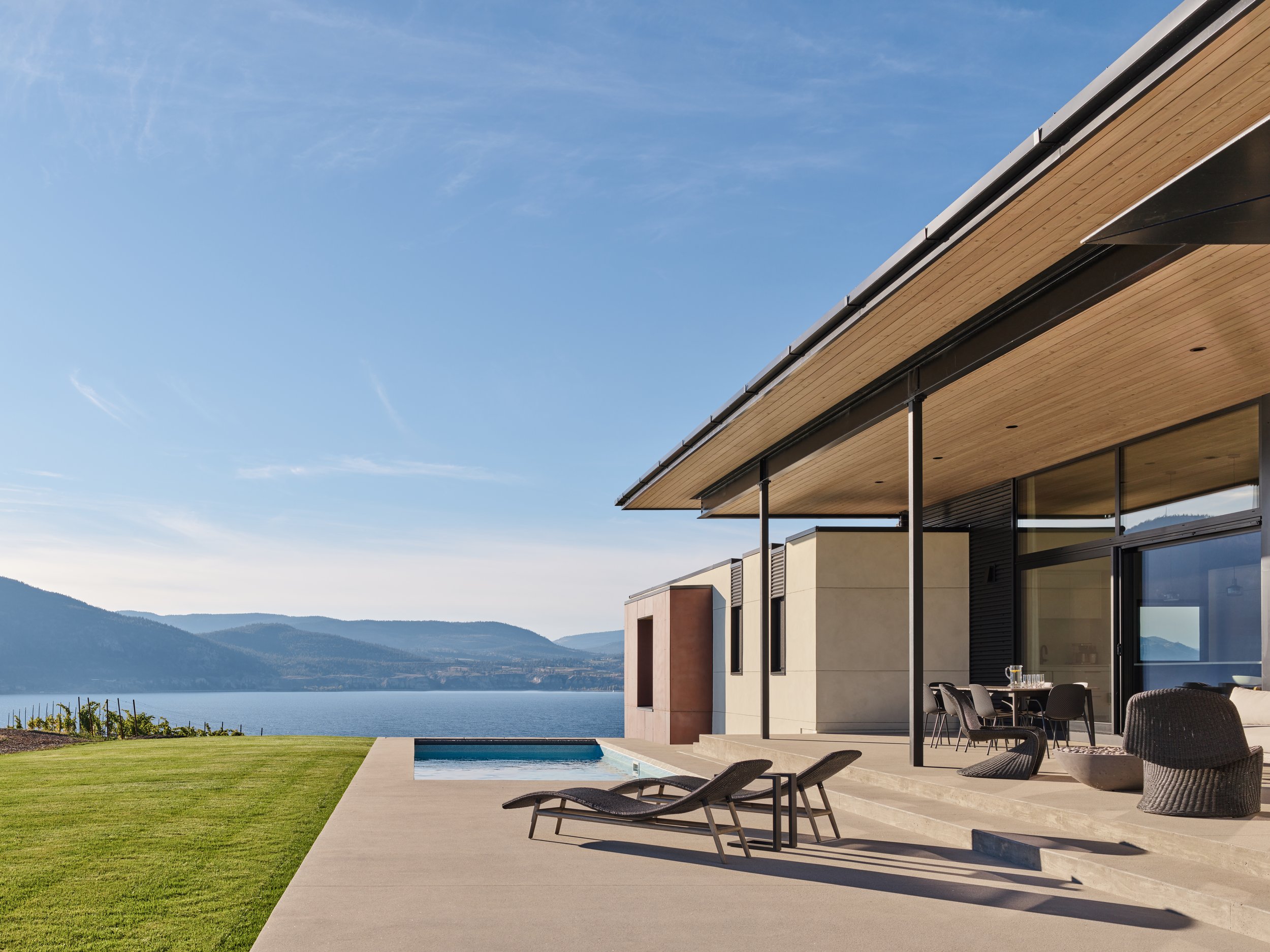
Where these solid volumes meet the central pavilion, they take on new roles. One becomes the hearth, another forms the pantry wall, and the entry volume helps define the kitchen. The shared room remains open, but its scale and different areas are established by the surrounding pieces rather than by adding partitions.
The arrangement also produces several outdoor conditions. The principal terrace and pool open toward the lake, while the wings shelter the spaces between them from the stronger summer winds that arrive from the north. The broader orientation aligns the house with the vineyard and western view, allowing the near scale of the vines and the distant lake to be read together.
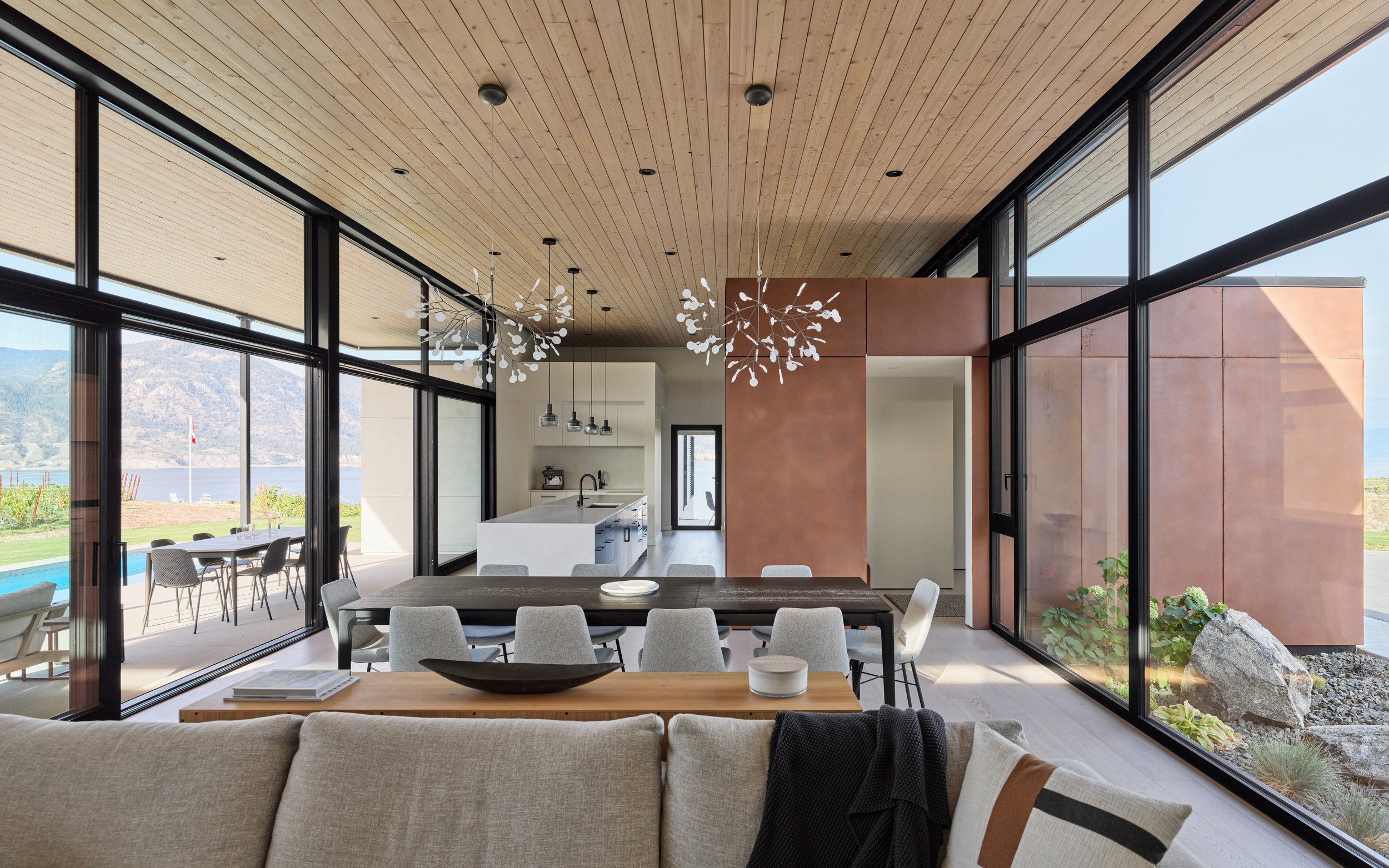
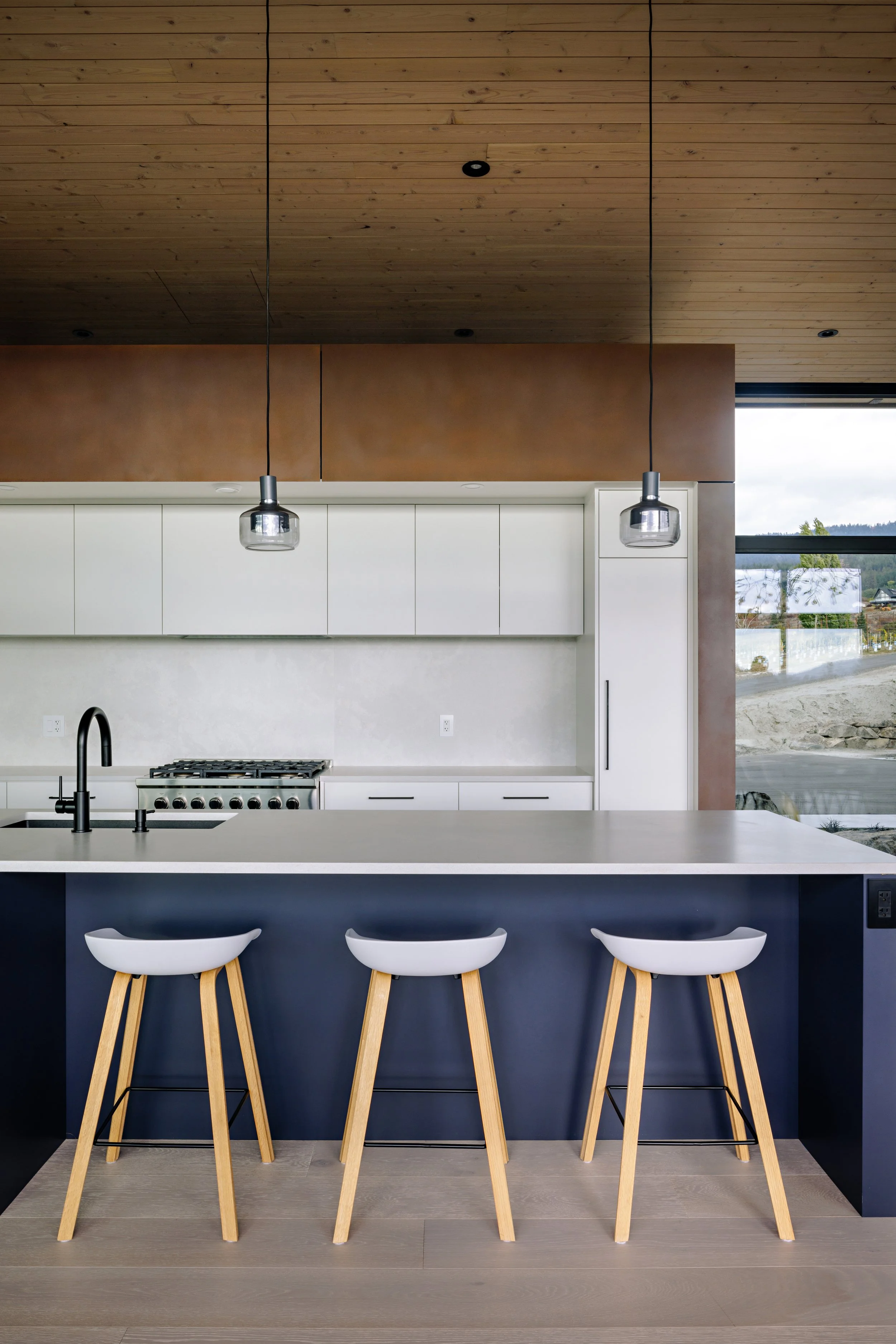
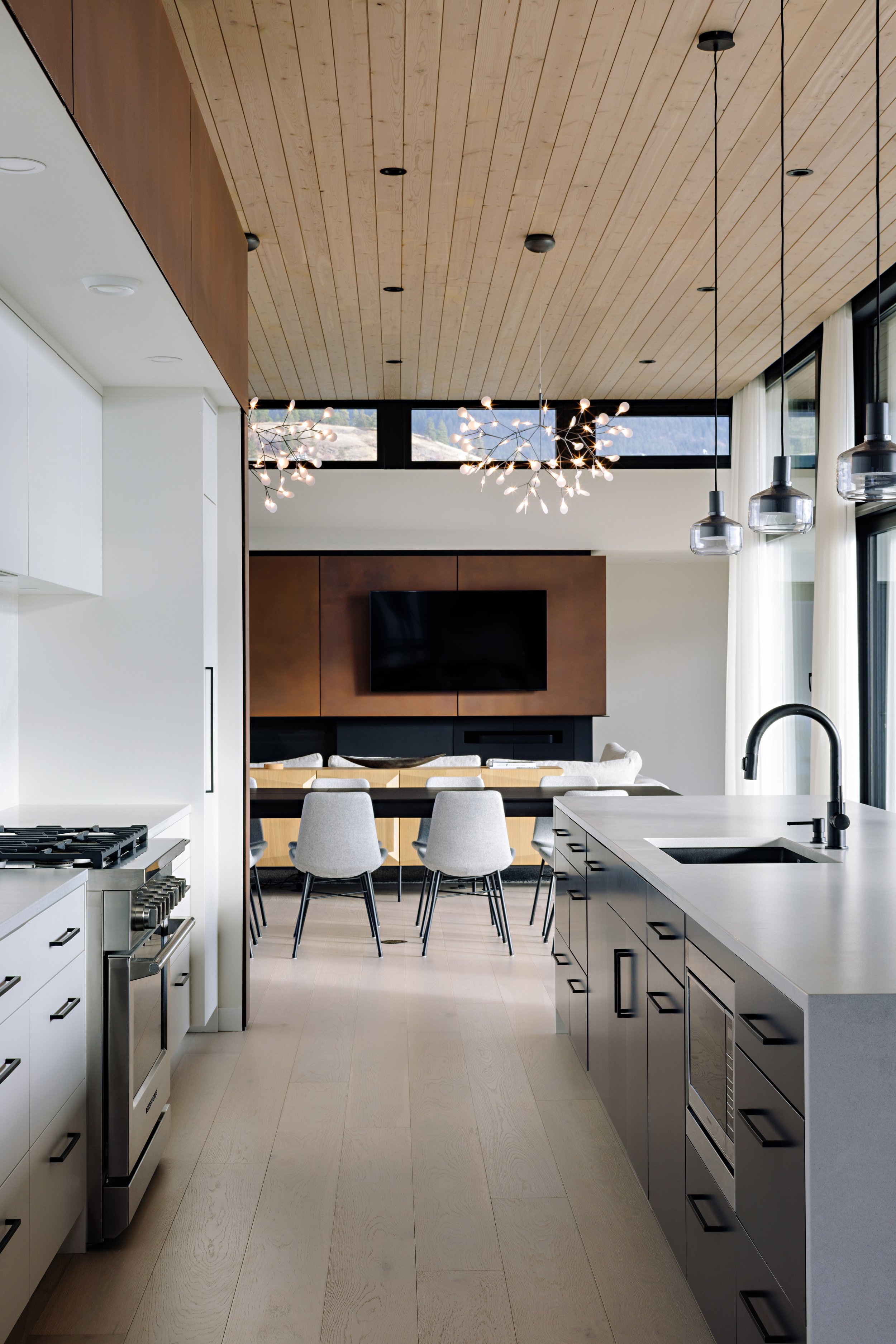
One asymmetrical hip roof gathers the separate parts into a single building. Conventional light-timber trusses sit on wood beams above the glazing, while a steel girder carries the large south patio overhang. The structure is held flush so that the wood-lined ceiling reads as a continuous plane across the living, dining and kitchen spaces.
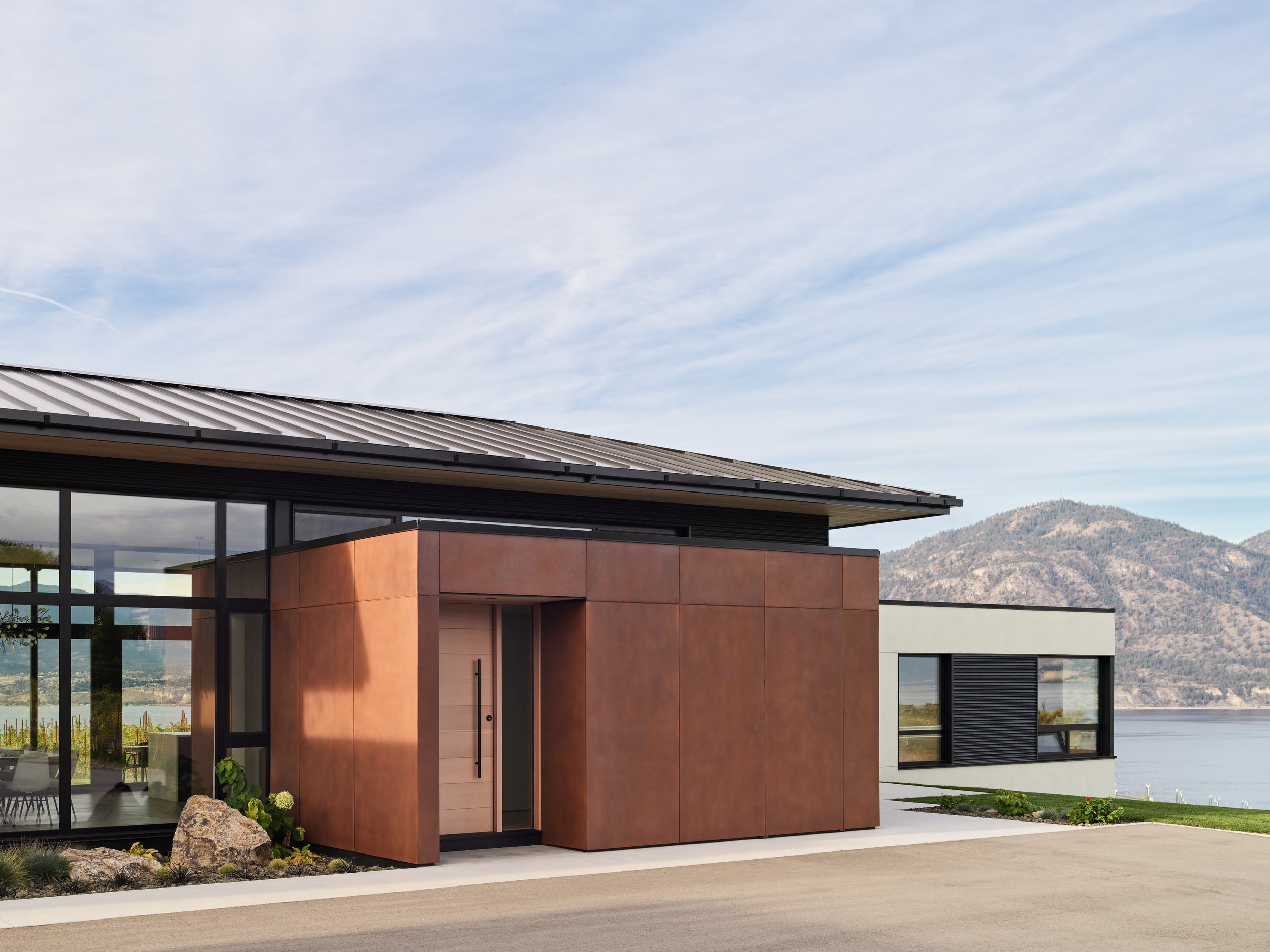
Fine-grain stucco covers the larger wings, with preweathered steel concentrated at the entry, hearth and smaller projections. Corrugated black metal wraps the glazed pavilion. The material hierarchy gives the more solid volumes weight while keeping the central room visually lighter, and it concentrates the more costly cladding where it has the greatest presence.

The house is organized through a balance of separation and connection. Its private rooms occupy lower, more enclosed volumes, while the shared spaces meet within a taller and more transparent pavilion. One roof holds these parts together, allowing the house to feel both dispersed across the vineyard and complete as a single building.