
The Cider Barn
Summerland Heritage Cider grew out of a family orchard and years of cider making among friends. What began as a small operation in a garage eventually needed more room to press, ferment and store cider, along with a public place where people could taste what was being made. Rather than separate those functions, the Cider Barn was conceived as a working agricultural building where production would remain visible and central to the experience of the business.
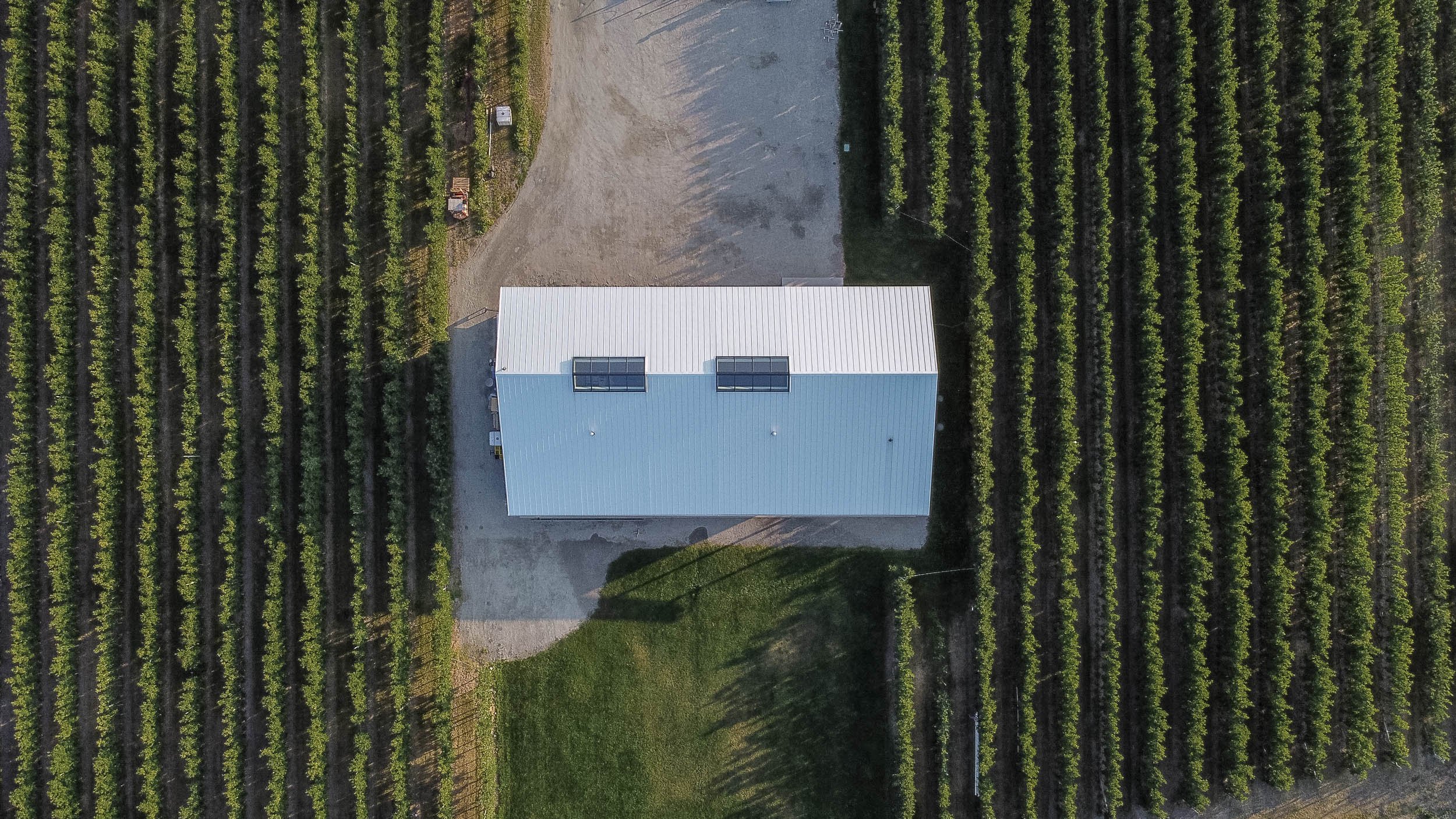
The barn sits among the existing apple rows, halfway between the original tasting room at Johnson Street and the back of the property. Its gable rises above the orchard from a distance, while the trees conceal much of the building at ground level. The placement leaves a protected yard to the south and allows the building to operate as a gate between the public side of the cidery and the orchard beyond.
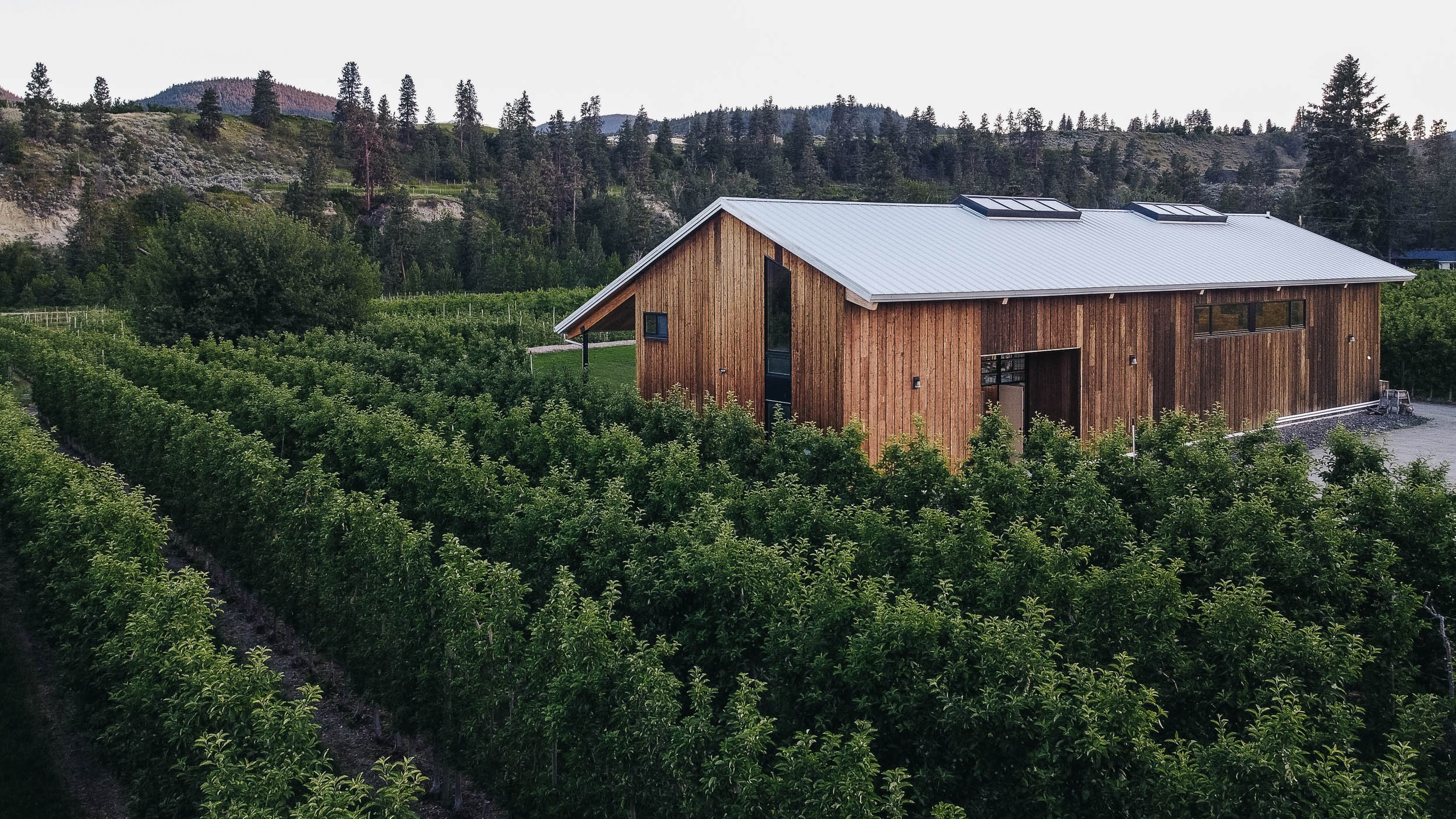
The building was laid out around the work of making cider. Tanks, fruit bins, totes, forklifts and the sequence of pressing and fermentation established the dimensions of the production floor. Large wood-and-steel trusses keep twelve feet clear beneath them and extend over the outdoor press area, leaving most of it free of columns. A ridge skylight runs above the open production hall, bringing daylight between the trusses and onto the Douglas fir plywood walls. The structure is doing practical work, but its repeated timber beams, steel plates and diagonal braces also give the room much of its character.
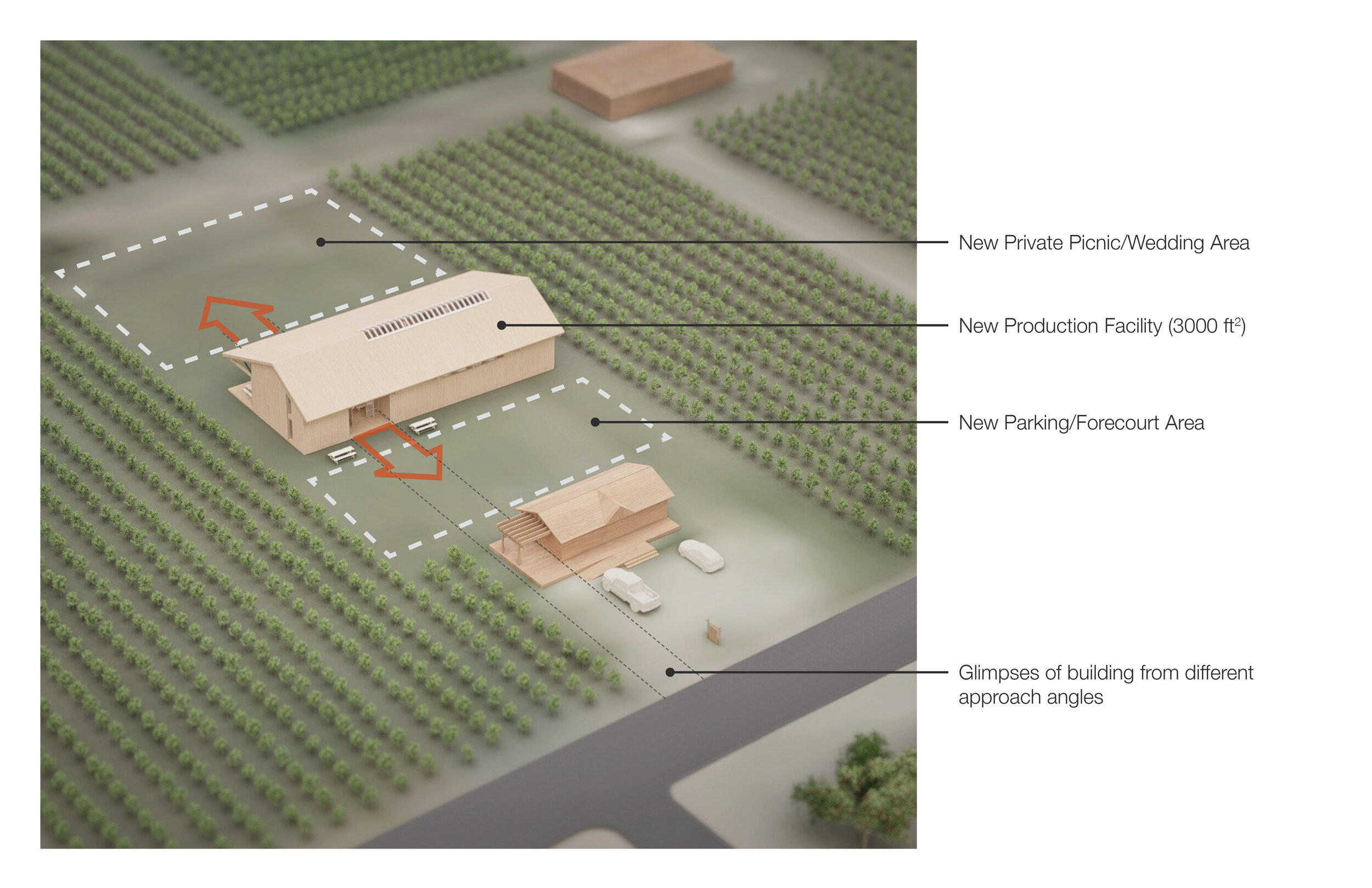


Cider making also gives the building a seasonal rhythm. Apples arrive in the fall and are pressed in November. Fermentation continues for the following months, but once that work is finished, much of the production floor is no longer needed until the next harvest. The bins and equipment can be moved out and the same open room can be used for weddings, live music and community gatherings. In that sense it works much like older agricultural barns: not as a room assigned permanently to one activity, but as a useful volume whose occupation changes over the year.

More than a barn, the structure is a mediator between tradition and modernity, production and hospitality, community and landscape. It offers a practical home for the work of cidermaking while also creating a welcoming place for people to gather.
